










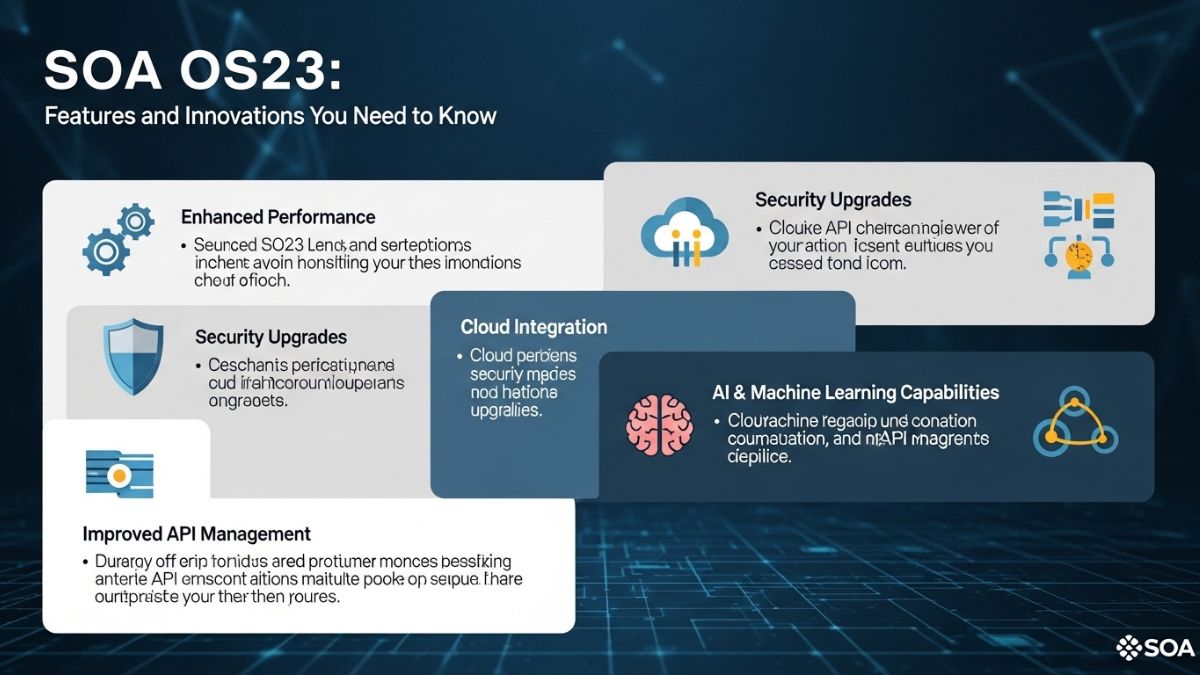
Welcome to the future of software architecture with SOA OS23! As businesses continue to evolve in an increasingly digital world, staying ahead of the curve is essential. SOA OS23 brings a suite of powerful features and innovations designed to streamline processes, enhance collaboration, and drive efficiency. Whether you’re a tech enthusiast or a seasoned developer, understanding this latest advancement can unlock new possibilities for your projects.
With its focus on flexibility and integration, SOA OS23 is not just another update—it’s a game-changer. Get ready to dive into what makes this version stand out from its predecessors and how it can transform your approach to service-oriented architecture. Let’s explore together!
What is SOA (Service-Oriented Architecture)?
Service-Oriented Architecture, commonly known as SOA, is a design paradigm that enables software components to communicate and share data through services. These services are distinct units of functionality that can be reused across different applications.
At its core, SOA emphasizes interoperability. This means various systems can work together seamlessly, regardless of their underlying technologies or platforms. By breaking down complex applications into smaller, manageable pieces, organizations can enhance flexibility and accelerate development.
SOA operates on standardized protocols like HTTP and XML, making it easier for disparate systems to interact. This architecture supports integration among various business processes while promoting scalability and agility in response to changing demands.
Organizations adopting SOA often benefit from reduced redundancy and improved efficiency in their IT ecosystems. With a focus on modularity, businesses can innovate faster by enabling teams to develop new features independently without disrupting existing services.
The Evolution of SOA OS23
The evolution of SOA OS23 reflects the rapid advancements in technology and business needs. Initially, service-oriented architecture focused on integrating disparate systems through rigid protocols. As demands grew, so did flexibility.
With SOA OS23, there’s a notable shift toward microservices. This modular approach allows organizations to develop and deploy services independently. It showcases enhanced agility for adapting to market changes.
Furthermore, cloud computing has played a critical role in this evolution. The rise of serverless architectures simplifies deployment and scaling processes significantly.
Security enhancements are also key components of SOA OS23’s journey. Today’s solutions prioritize robust security measures that protect data without compromising performance.
User experience has become paramount as well. Modern interfaces ensure that even non-technical users can interact seamlessly with complex backend processes, making technology accessible for everyone involved.
Key Features of SOA OS23
SOA OS23 introduces a suite of features designed to enhance flexibility and efficiency. One standout element is its modular architecture, allowing developers to build applications that can easily adapt to changing business needs.
Another key feature is improved interoperability. SOA OS23 supports multiple protocols and data formats, making it easier for different systems to communicate seamlessly.
Dynamic service discovery is also an essential aspect. This enables real-time identification of available services, streamlining the development process and reducing downtime.
Enhanced security measures are integrated into the platform as well. With advanced authentication protocols, organizations can ensure their data remains protected while maintaining easy access for authorized users.
SOA OS23 includes robust analytics capabilities. These built-in tools help businesses monitor performance metrics effortlessly, enabling informed decision-making based on real-time insights.
Benefits of Using SOA OS23
Adopting SOA OS23 brings a myriad of advantages for organizations. Its modular architecture promotes agility, allowing businesses to adapt quickly to changing market demands.
Integration becomes seamless with SOA OS23, as it connects various services effortlessly within an organization’s ecosystem. This interoperability reduces silos and enhances collaboration across teams.
Cost efficiency is another significant benefit. By reusing existing services, companies can minimize development costs while accelerating time-to-market for new applications or features.
Scalability stands out as well—SOA OS23 enables easy scaling of individual components without affecting the entire system. As demand fluctuates, organizations can respond promptly without major overhauls.
Security also receives a boost through standardized protocols and robust mechanisms that protect data exchanges between services. With these benefits combined, businesses are better positioned to innovate and thrive in today’s digital landscape.
Real-World Examples of Successful Implementation
Numerous organizations have embraced SOA OS23, showcasing its transformative power. For instance, a major retail chain integrated SOA OS23 to streamline their inventory management system. This shift enabled real-time data updates across all platforms, enhancing customer experience significantly.
In the healthcare sector, a hospital network utilized SOA OS23 for patient record management. By breaking down silos between departments, they improved communication and reduced wait times for patients.
Meanwhile, an e-commerce giant leveraged SOA OS23 to enhance their payment processing systems. The result was increased transaction speeds and heightened security measures that boosted consumer confidence.
These examples illustrate how diverse industries can harness the capabilities of SOA OS23 to drive efficiency and innovation in practical applications. Each case highlights unique challenges addressed by this architecture’s flexibility and scalability.
Future Developments and Innovations
As SOA OS23 continues to evolve, we can expect exciting innovations on the horizon. One area gaining traction is enhanced integration with artificial intelligence. This will allow systems to adapt in real time, improving efficiency and decision-making.
Another significant development is the shift towards microservices architecture. This approach offers greater flexibility, enabling businesses to scale their services seamlessly while minimizing downtime.
Blockchain technology may also find its way into SOA OS23 frameworks. By adding layers of security and transparency, organizations can enhance trust across distributed networks.
Additionally, an increased focus on cloud-native solutions could redefine how enterprises deploy applications. The potential for hybrid environments means that companies can tailor their infrastructure based on specific needs without sacrificing performance or agility.
These advancements promise a more robust and responsive service-oriented architecture landscape in the near future.
Conclusion
The SOA OS23 is making waves in the tech industry, and for good reason. It builds on the solid foundation of service-oriented architecture, bringing fresh innovations to the table. Businesses that adopt this model can streamline operations and improve efficiency.
With features like enhanced scalability and improved integration capabilities, SOA OS23 positions itself as a game changer. Companies leveraging these benefits are already seeing significant advantages. Real-world case studies highlight how organizations have transformed their processes using this architecture.
Looking ahead, further developments promise even more exciting advancements in SOA OS23. As technology continues to evolve, staying updated with these changes will be crucial for businesses aiming to remain competitive.